Article: How to Create a Luxury Outdoor Living Space in the UK | Lux Living
How to Create a Luxury Outdoor Living Space in the UK | Lux Living
The most beautiful outdoor spaces are never accidental. They are designed with the same intention, proportion and layered detail that defines a refined interior. Here is how to bring that standard to your garden or terrace.
Why Outdoor Living Has Changed
The British garden has undergone a quiet revolution. Where outdoor space was once treated as seasonal and secondary, somewhere to store a plastic table and a forgotten barbecue, it is now considered an integral part of the home. Architects specify it. Interior designers extend their vision into it. Homeowners invest in it seriously.
This shift reflects a broader understanding: that our surroundings shape how we feel, how we entertain and how we recover from the demands of daily life. A thoughtfully designed terrace is not a luxury. It is a considered investment in how you live.
The challenge in Britain, of course, is the weather. But that is precisely why good design matters more here, not less. A well-planned outdoor space works with the British climate, and extends well beyond summer.
Step One: Zone With Intention
The instinct in many gardens is to fill the space. A bench here, a table there, a few mismatched chairs pulled out when the sun appears. The result is a space that never quite coheres, and never quite invites.
Luxury spaces feel intentional because they are. The first step is to define how you want to use your outdoor area, and then design distinct zones for each purpose.
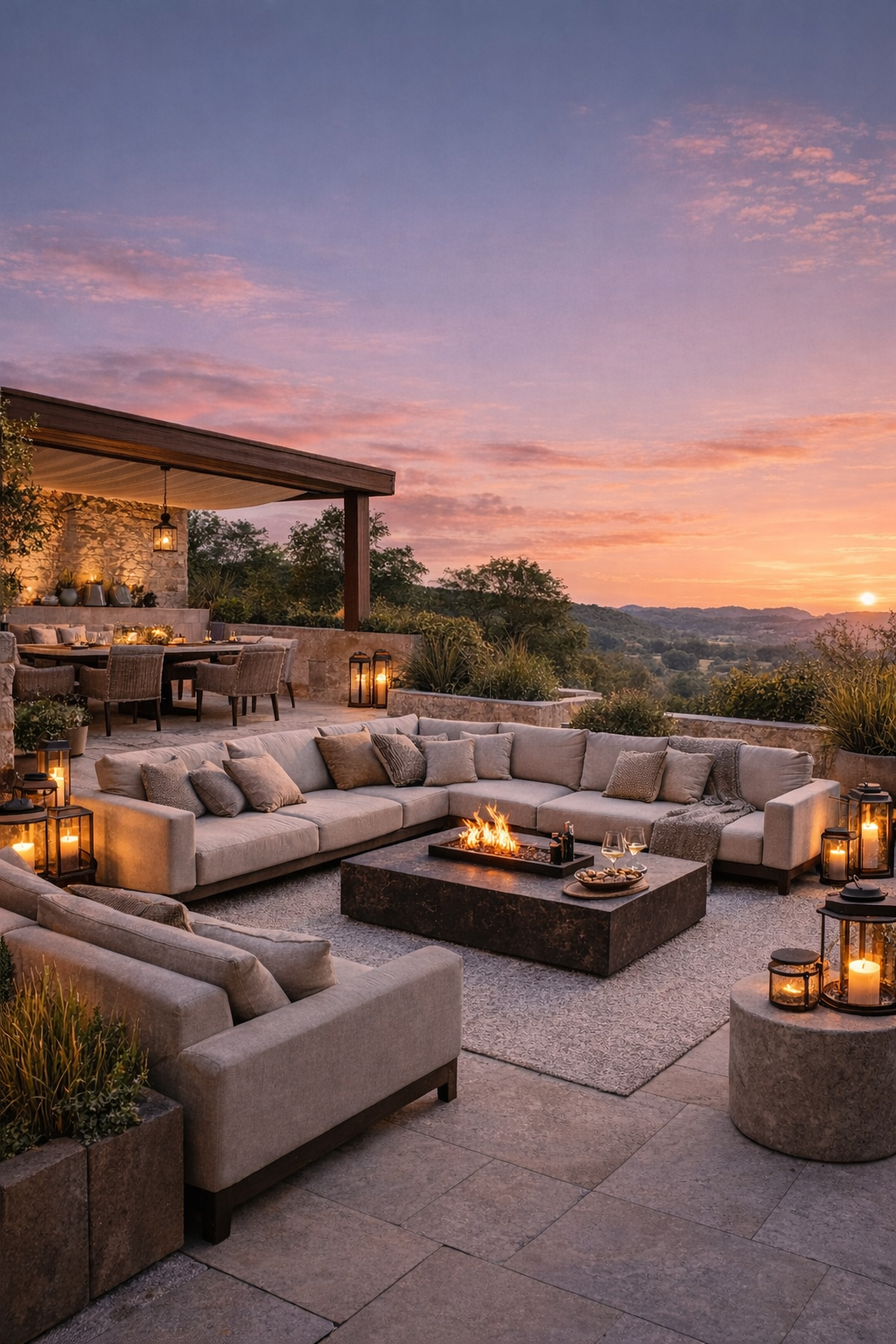
- A lounge zone: A generous modular sofa, anchored with an outdoor rug, positioned to catch the afternoon light and sheltered from prevailing winds
- A dining zone: A well-proportioned table and chairs, set apart from the lounge to create a genuine transition between relaxing and entertaining
- A contemplative corner: A single armchair or a pair of them, positioned toward a view or a planted border, somewhere quiet to begin the day or end it
Even smaller gardens can accommodate two or three of these zones, if the furniture is chosen with scale in mind. Negative space is not wasted space. It is what allows each zone to breathe.
Luxury spaces feel intentional because they are. Define how you want to use the space, then design each zone to serve that purpose perfectly.
Step Two: Choose Materials That Earn Their Place
Outdoor furniture is a long-term investment, and the materials you choose will determine whether it looks better in ten years or worse. In the UK, that decision is inseparable from the question of weather.
Teak
Teak remains the gold standard in luxury outdoor furniture, and for good reason. Naturally high in oils, it resists water, insects and decay with minimal intervention.
Left untreated, it develops a distinguished silver-grey patina. Treated with teak oil, it retains its warm honey tones. Either way, it ages beautifully, gaining character rather than deteriorating.
Teak furniture is an heirloom proposition. Bought well, it will outlast the garden it sits in.
Powder-Coated Aluminium
For a more contemporary aesthetic, powder-coated aluminium is the material of choice. It is exceptionally lightweight, rust-proof and available in a refined palette of finishes, from warm sand to deep charcoal. Unlike wrought iron, it will not corrode. Unlike cheaper metals, it will not flex or warp.
Aluminium pairs particularly well with high-performance fabric cushions, creating a clean, architectural look that suits modern homes.
Outdoor Performance Fabrics
The revolution in outdoor textiles over the past decade has been remarkable. Today's performance fabrics bear no resemblance to the sun-bleached, stiffened cushions of a previous generation. Premium outdoor upholstery is now designed to resist UV fading, repel water and prevent mildew, while remaining genuinely soft and comfortable to sit on.
When selecting cushions, look for fabrics treated with solution-dyeing rather than surface coatings. The colour runs through the fibre itself, meaning it will not fade unevenly or crack with use.
Step Three: Layer for Atmosphere
The gap between a functional outdoor space and a genuinely luxurious one almost always comes down to layering. This is what distinguishes a showroom from a home, the accumulation of considered detail.
Start with the foundation: an outdoor rug in a neutral weave to anchor the seating area and soften the hardscape beneath. Add cushions in tonal variations, different textures within the same colour family create depth without visual noise. Introduce throws in a weather-resistant fabric for cooler evenings; the gesture of providing warmth is as important as the warmth itself.
Then consider the finishing details:
Sculptural lanterns in varying heights, positioned at ground level and on surfaces, for layered lighting
Accent side tables in contrasting materials, a stone top beside a teak sofa, for example, to introduce texture
Planters with structured planting that frames the space without overwhelming it
None of these elements is expensive individually. Together, they transform the character of a space entirely.
Step Four: Design for Year-Round Use
A terrace that closes in October is a terrace that earns its keep for perhaps four months of the year. A well-designed outdoor space, with the right interventions, can serve you from March through to November, and beyond.
Heating
Integrated or freestanding outdoor heaters have improved considerably in both design and efficiency. Sleek electric infrared heaters can be wall-mounted or ceiling-fixed beneath a pergola, providing instant warmth without the bulk of a traditional gas patio heater. For a more atmospheric option, a bioethanol fire table combines warmth and visual interest in a single piece of furniture.
Lighting
Lighting is perhaps the single most transformative element in extending outdoor use. The principle is the same as interior lighting: layer your sources, avoid single overhead light, and choose warm tones over cool ones.
Wall-mounted lights frame the space architecturally. Table lanterns create intimate pools of warmth. String lights, used sparingly and hung with care, can define the canopy of an outdoor room.
Light determines mood. Get the lighting right, and your outdoor space will feel as inviting at nine in the evening as it does at noon.
Shelter
A pergola, retractable awning or oversized garden umbrella extends usability in both directions, shade in summer, protection from light rain in spring and autumn. Siting matters: consider the orientation of your terrace, the direction of the prevailing wind and where afternoon shade falls before committing to a structure.
Step Five: Maintain Continuity With Your Interiors
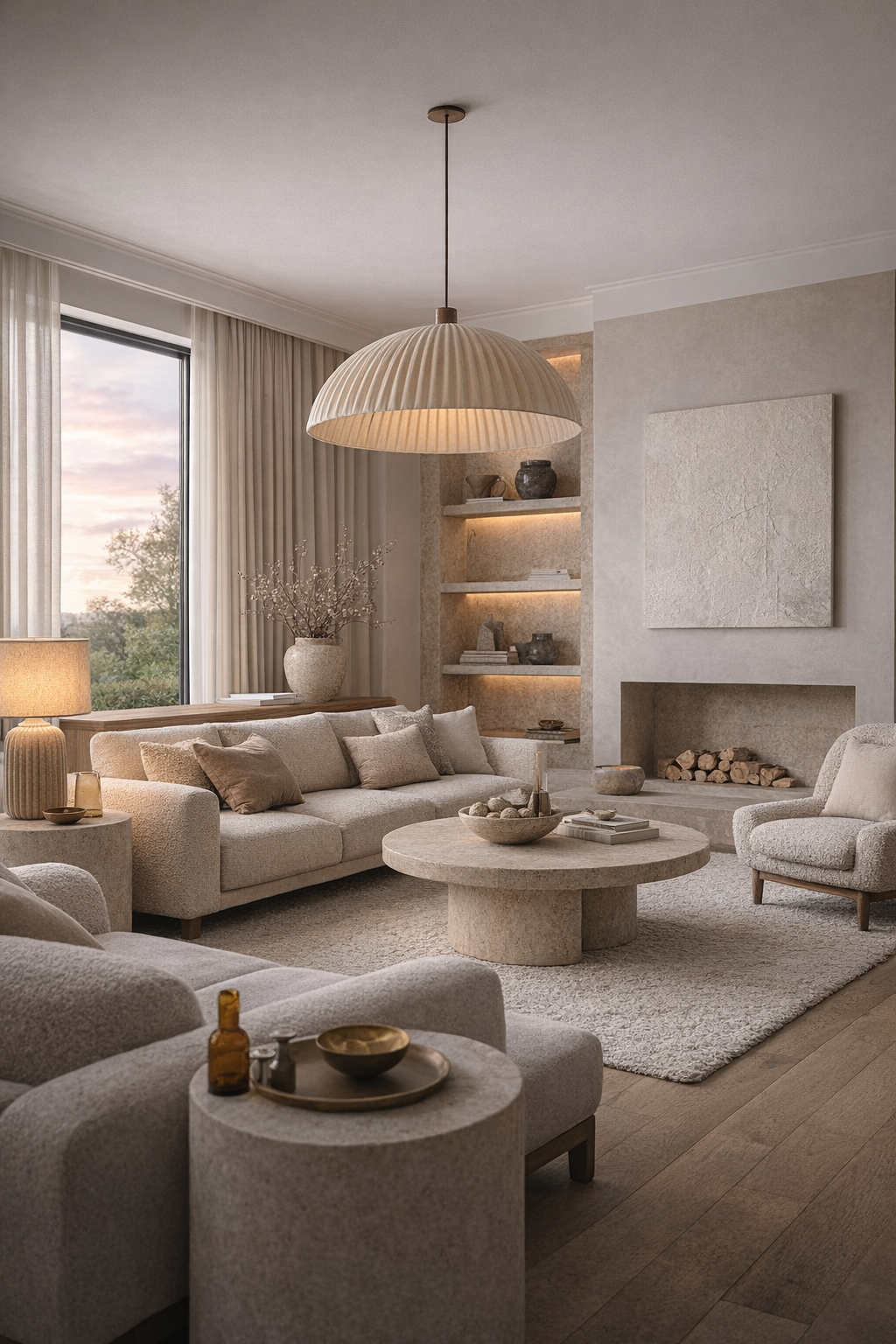
The most sophisticated outdoor spaces feel like a continuation of the home, not a departure from it. This is the principle of indoor-outdoor living, and it is what elevates a well-furnished garden from pleasant to genuinely impressive.
If your interior palette runs to warm neutrals and organic textures, echo them outside. If your home favours clean lines and sculptural furniture, carry that vocabulary onto the terrace. The specific pieces will differ, they must, to perform outdoors, but the visual language should remain consistent.
Consider the view from inside as well as out. The most beautiful terraces are those that look just as considered from the kitchen or living room as they do when you are sitting in them.
True luxury in outdoor living is not about excess. It is about considered choices, enduring materials and the confidence to leave space for nothing.
When these principles come together, purposeful zoning, exceptional materials, layered styling and year-round thinking, the result is an outdoor space that earns its place as a genuine room of the house. A place to gather, to unwind, and to live well.
→ Explore the Lux Living outdoor collection at luxliving.uk — crafted for beautiful living, inside and out.